

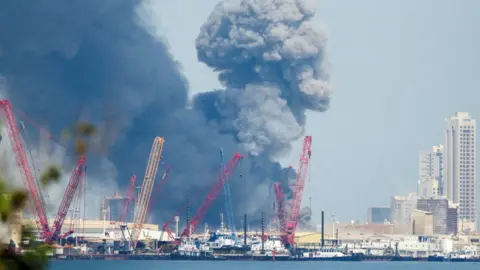
Middle East on the Brink: Israel Strikes Tehran Following Massive Iranian Missile Barrage
TEHRAN/JERUSALEM – The long-simmering “shadow war” between Israel and Iran has erupted into a direct and dangerous new phase. In a significant escalation that has sent shockwaves across the globe, Israel launched a series of broad-scale airstrikes targeting the Iranian capital, Tehran, early Friday morning. The strikes came as a direct response to a massive wave of missiles fired by Iran toward Israeli territory hours earlier.
For the residents of Tehran, the night was punctuated by the terrifying roar of explosions and the rhythmic thud of anti-aircraft fire. Social media footage captured streaks of light illuminating the night sky, as defense systems scrambled to intercept incoming projectiles. While the full extent of the damage is still being assessed, the psychological impact on a population already weary of regional tensions is profound.
A Night of Fire and Fear
The escalation began on Thursday evening when Iran launched what military analysts are calling one of its most sophisticated missile barrages to date. According to the Israeli Defense Forces (IDF), dozens of ballistic missiles were detected crossing into Israeli airspace. While Israel’s “Iron Dome” and “Arrow” defense systems intercepted the majority of the threats, the sheer scale of the attack signaled a shift in Tehran’s willingness to engage directly rather than through regional proxies.
In a televised address shortly after the strikes on Tehran began, Israeli officials stated that the military was targeting “strategic assets” and military infrastructure used to facilitate the missile launches.
“We will not tolerate direct attacks on our sovereignty,” an IDF spokesperson said. “Our response is measured but firm, aimed at degrading the capabilities of those who seek to harm our citizens.”
The Human Toll of Geopolitics
Beyond the tactical maneuvers and military jargon lies a deeply unsettling reality for the millions of civilians caught in the crossfire. In Jerusalem and Tel Aviv, families spent the night in bomb shelters, comforted by the familiar but harrowing sound of sirens. In Tehran, the uncertainty of what comes next has left many in a state of high anxiety, with long lines forming at gas stations and grocery stores as people brace for a potential wider conflict.
The emotional resonance of this escalation cannot be overstated. For many in the region, this feels less like a strategic chess match and more like a slide toward an all-out war that no one—save for the most hardline factions—actually wants.
Global Reaction and the Path Forward
The international community has reacted with a mix of condemnation and urgent calls for restraint. The United Nations Secretary-General issued a statement warning that the region is at a “tipping point,” urging both nations to step back from the precipice of a full-scale regional war.
Diplomatic sources suggest that behind-the-scenes efforts are underway by the United States and regional mediators like Qatar and Egypt to de-escalate the situation. However, with both sides now having struck each other’s sovereign soil directly, the traditional “rules of engagement” have been rewritten.
What Happens Next?
As the sun rises over the smoke-filled horizons of the Middle East, the world watches with bated breath. The immediate question is whether Iran will choose to retaliate further, triggering a cycle of violence that could draw in neighboring countries and global powers, or if this exchange will serve as a bloody “finish line” for this specific round of hostilities.
For now, the streets of Tehran and Jerusalem remain quiet but tense. It is a fragile peace, held together by the hope that diplomacy can still find a voice amidst the thunder of missiles and the rhetoric of war.
- Sponsored: Looking for thebest CCTV camera price in Pakistan? Shop IP cameras,Wireless cameras, Long range 4G Solar security cameras Indoor Outdoor Bulb camera4G Camera and Multi Lans cameras and other electronics for home and business at unbeatable prices. MyGSS.pk offers a wide selection of quality brands like VStarcam,IMOU,Dahua,Ezviz,Tenda,V380,Hikvision,andTP-Link and also the official distributor of VStarcam brand.” COD is available in Lahore, Karachi, Islamabad, Rawalpindi, Pashiwer, Multan, Quetta, & over 300+ cities and towns in Pakistan, And offers CCTV camera Installation guide on website