

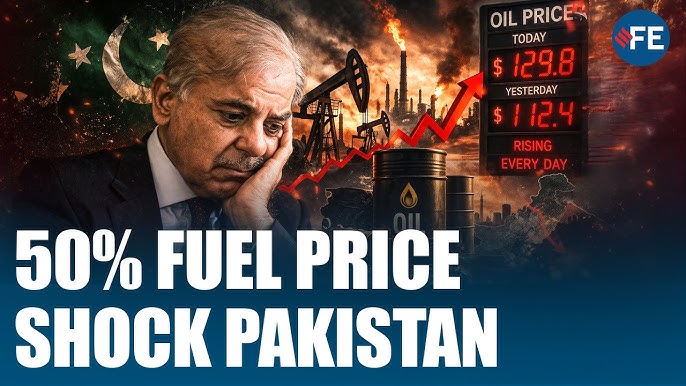
Pakistan’s oil market fuelling economic crisis
Pakistan’s oil sector is increasingly being seen as a major factor behind the country’s deepening economic challenges, as rising global prices and domestic policy issues continue to drive up fuel costs.
The recent surge in international oil prices—largely influenced by tensions in the Middle East—has significantly increased Pakistan’s import bill. Being heavily reliant on imported fuel, Pakistan has felt the impact directly, with petrol and diesel prices climbing sharply in recent weeks. This has added to inflation, increasing the cost of transportation, electricity generation and essential goods.
Experts note that the situation is further complicated by structural weaknesses in the domestic oil market. While private companies manage supply and distribution, pricing decisions remain closely controlled by the government. This mixed system has often resulted in inconsistent policies, including subsidies, price caps and delayed payments to oil companies.
Authorities initially attempted to cushion the public from rising costs through subsidies, but the growing financial burden made this approach unsustainable. As a result, the government has gradually allowed fuel prices to reflect global market trends, passing the pressure on to consumers.
Analysts warn that artificial price controls can lead to supply shortages and financial strain on oil companies, while a fully market-driven approach, although more stable, places a heavier burden on the public.
Economists suggest that long-term solutions lie in structural reforms, including improving market transparency, encouraging competition and providing targeted relief to vulnerable groups instead of broad subsidies.